A Chinese palace in Singapore
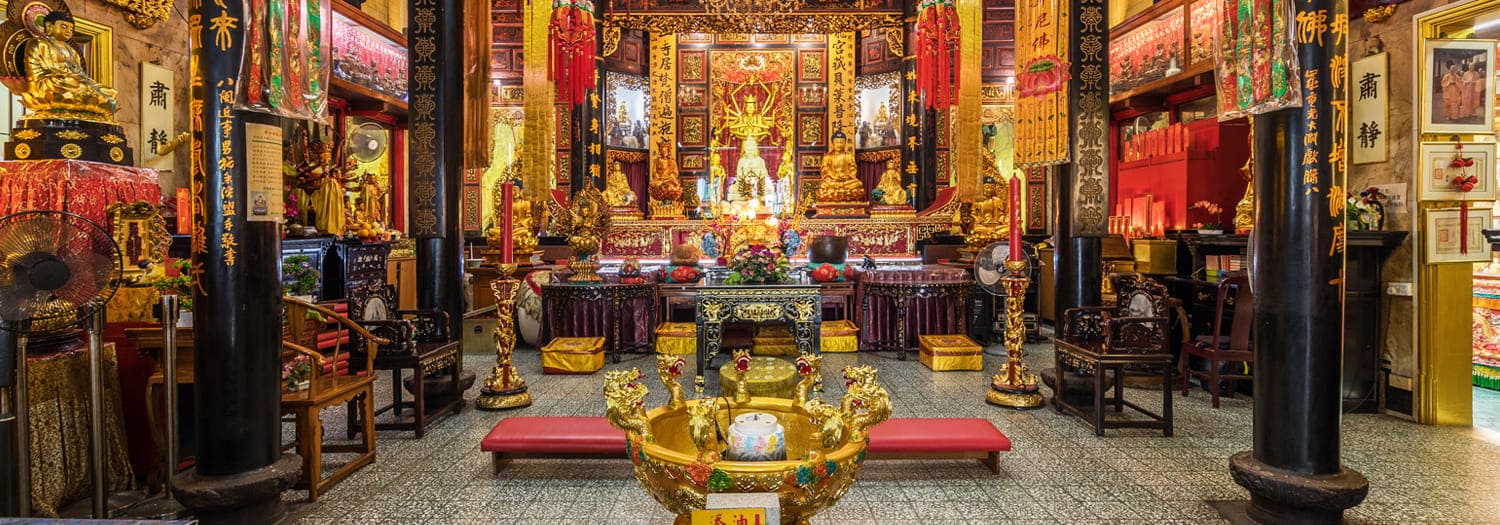
Built like a Chinese palace
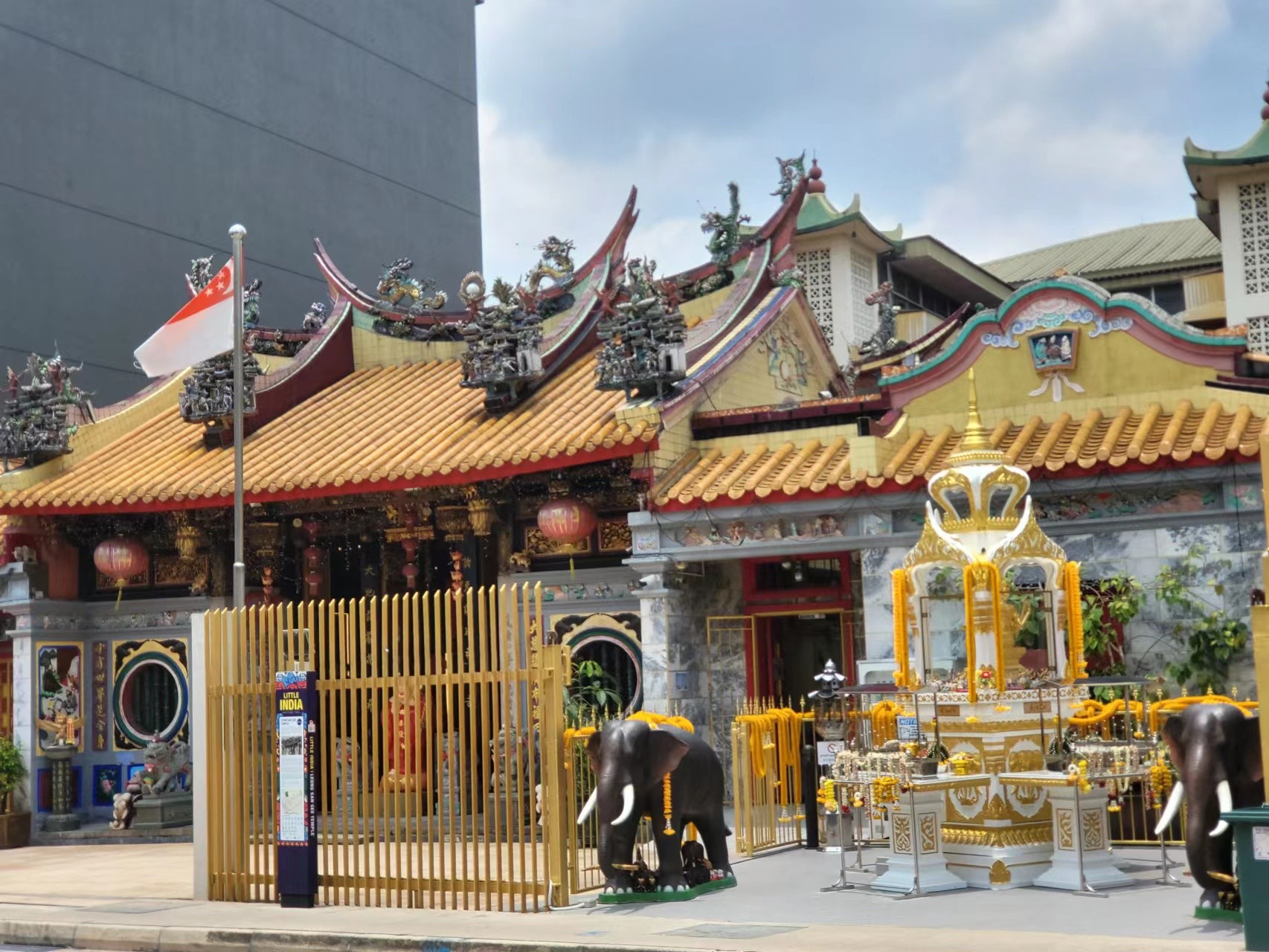
The new temple consists of a main hall, corridors, side verandas, four guest rooms, eight monks’ chambers, a kitchen, an ancestral worship hall, and prayer and meditation rooms. Architecturally, the main hall resembles a Chinese palace.
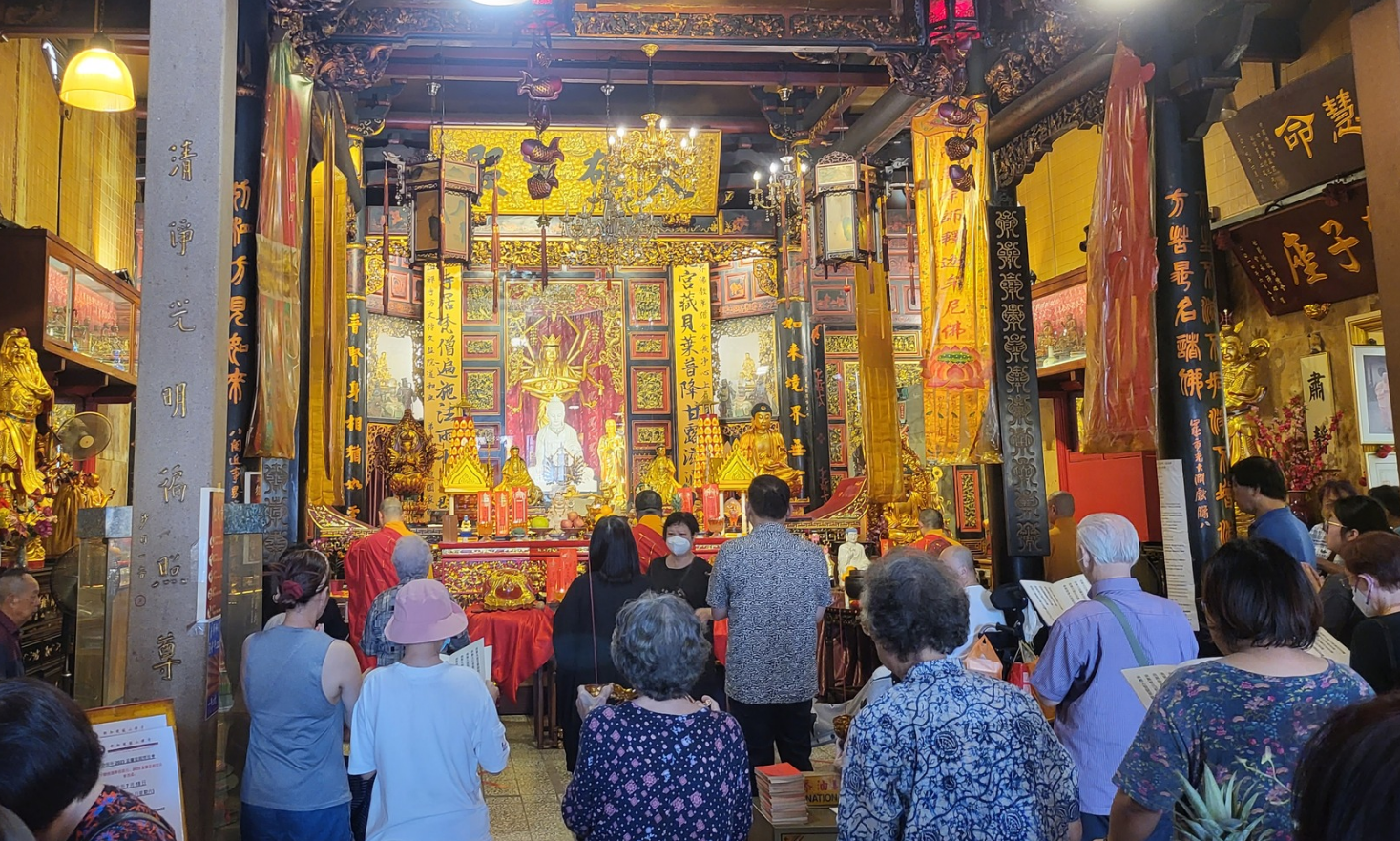
The timber used for the beam frames is richly carved with extremely ornate pieces of chimera, birds, dragons, flowers, and human figurines. “Cheng Hai” hardwood with a diameter of 25cm was originally used as columns, but some were later replaced by granite posts to avoid termite attacks.
The temple is built out of beams; the walls are screened partitions that do not extend to the underside of the roof, thus exposing the timber structure, typical of Chinese style buildings. Most remarkably, no nails were used in the construction of the main frame.
Walk in a clockwise direction within the temple, as instructed by Buddha. It is believed that this will bring about good Feng Shui.
Figurines of the Southern Fujian tradition
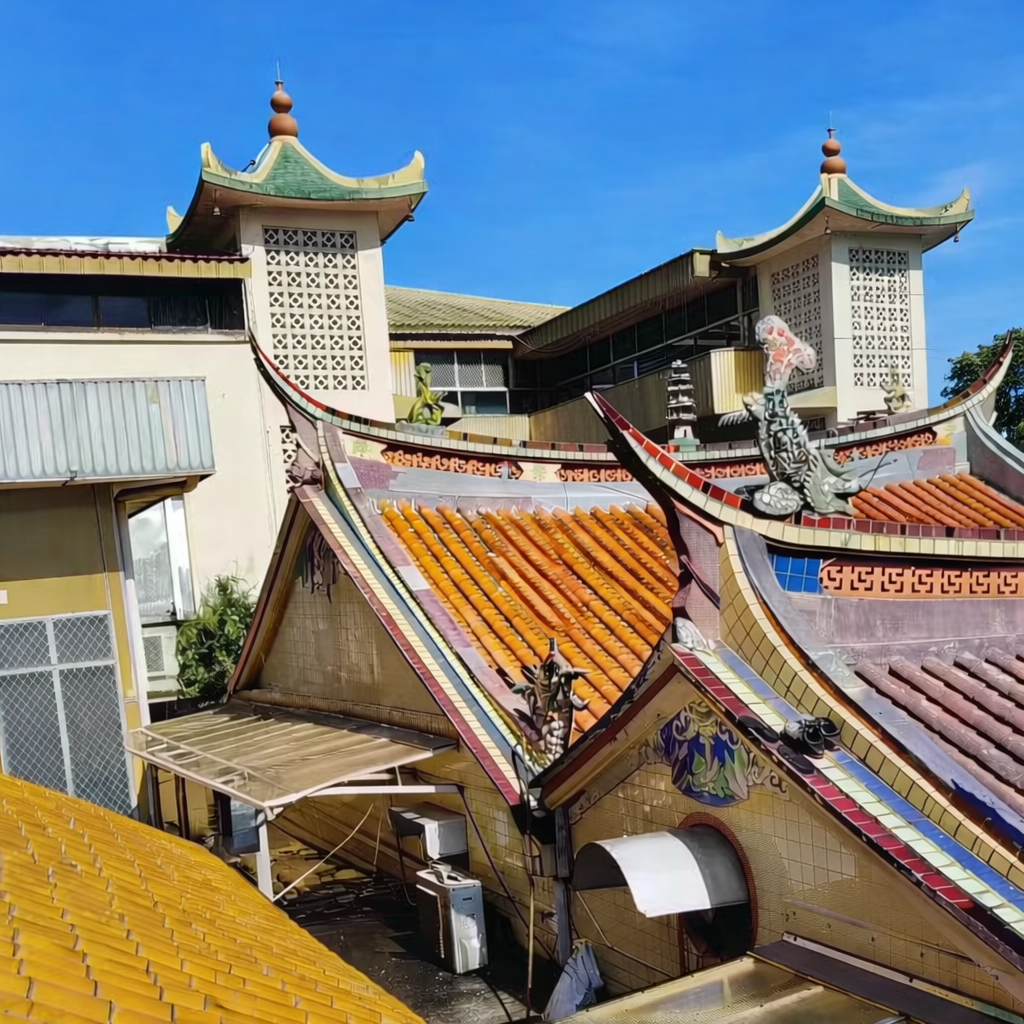
The temple roof is adorned with elaborate figurines in the traditional Southern Fujian (Hokkien) style known as Jian Nian (剪黏), a craft where porcelain fragments are cut and pasted onto stucco frameworks to create vivid, colourful sculptures. These decorations depict dragons, phoenixes, mythical beasts, historic characters, and scenes from Chinese folklore.
This decorative tradition originates from Southern Fujian province and is a hallmark of Hokkien temple architecture. The figurines, together with glazed ceramic pieces and stucco sculptures, bring the roofline to life, a proud reminder of the temple’s deep roots in Fujian craftsmanship.
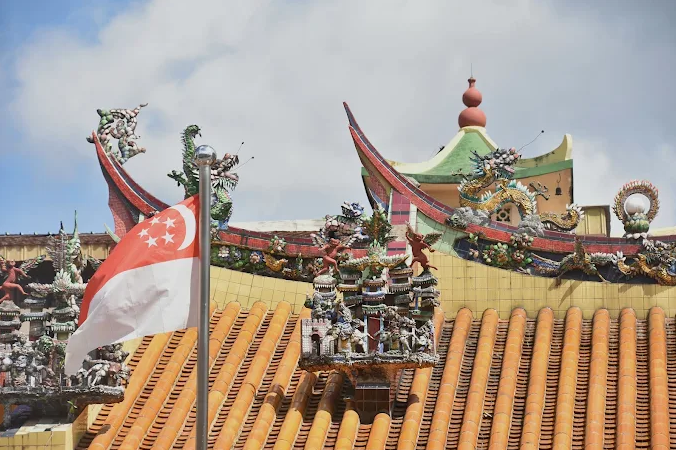
Photo: garthman420
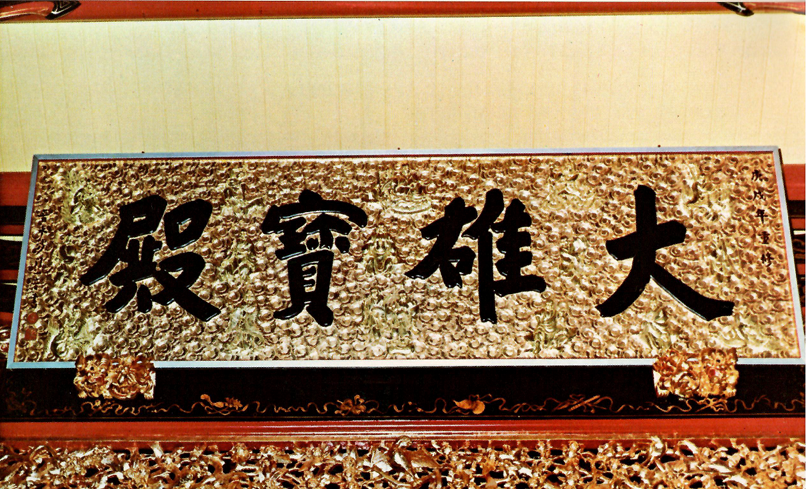
Da Xiong Bao Dian (大雄宝殿)
Inside the Main Hall hangs the plaque bearing the characters “大雄宝殿” (Hall of the Great Hero), a title given to the principal hall in Chinese Buddhist temples where the main deity, Shakyamuni Buddha, is enshrined.
The calligraphy on this plaque was inscribed by Master Hongyi (弘一法师), one of the most revered monks of modern Chinese Buddhism. Before his ordination, he was known as Li Shutong (李叔同), a celebrated artist, calligrapher, musician, and educator. His brushwork is treasured across the Chinese-speaking world, and having his calligraphy at our temple is a rare and precious honour.
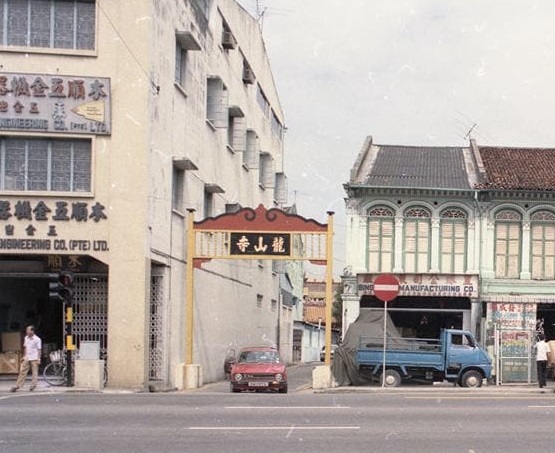
The Mountain Gate (山门). Credit: URA
The Mountain Gate (山门)
The road fronting the temple and leading up to the gate was a private road belonging to Leong San Buddhist Temple. This gate is known as Mountain Gate (Shan Men) and can be commonly found attached to temples on mountains all over the world. The private road was originally built for the convenience and safety of students from the Mee Toh School.